

Every component of supply chain management is essential to maintaining the smooth flow of goods from manufacturing to consumption. An important element in this system is Third-Party Logistics, or 3PL. In this blog, we’ll answer the question, what is 3PL, its importance in supply chain, and how it works to improve efficiency and optimise operations.
What Does 3PL Mean?
Let’s begin with the basics – what is the meaning of 3PL? 3PL means Third-Party Logistics. It refers to the outsourcing of logistics to a specialised third-party provider. These companies provide many different services, such as:
– Packaging
– Transportation
By handing these tasks over to a 3PL, businesses free up time to focus on what they do best, tap into professional logistics know-how and infrastructure, and keep things running efficiently without pouring money into costly in-house operations.
Learn how our 3PL fulfilment services help ecommerce brands scale with storage, picking, packing and shipping support.
3PL vs 4PL – What Is The Difference?
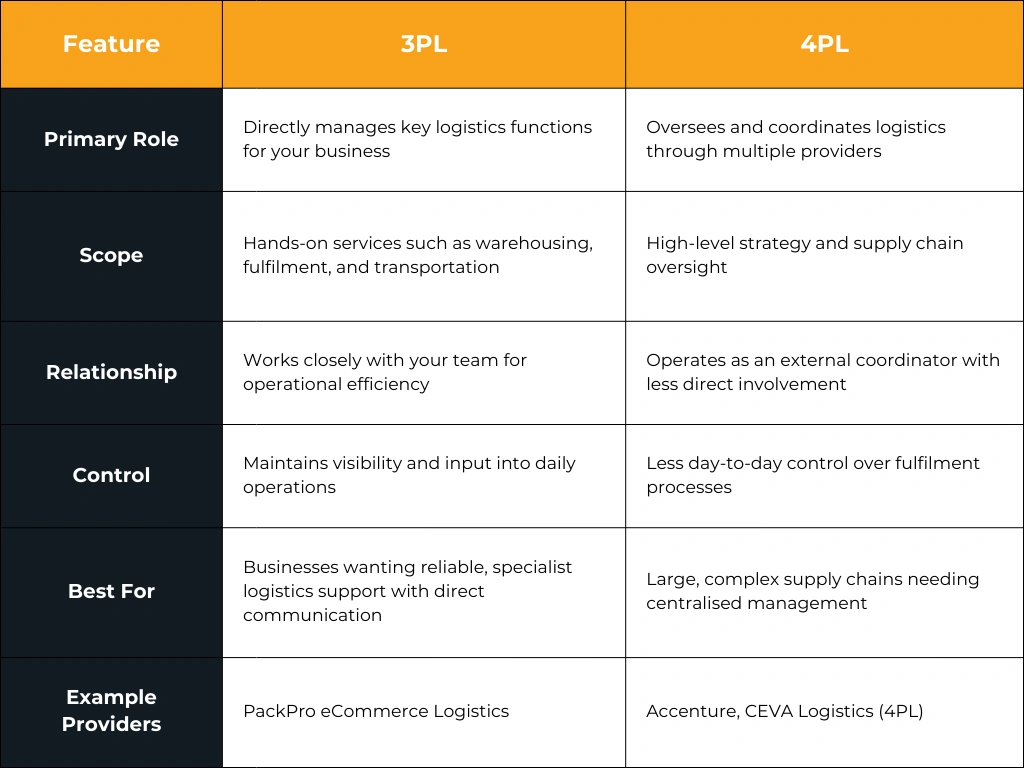
Before we get further into 3PL vs 4PL, it’s important to understand how the two logistics models differ. While both involve outsourcing logistics, they represent different approaches with varying levels of responsibility and involvement.
Third-Party Logistics (3PL) focuses on delivering hands-on, operational support. A 3PL provider manages specific supply chain functions — such as warehousing, order fulfilment, and transportation — and works closely with your business to keep goods moving efficiently. By partnering directly with a 3PL, companies maintain visibility and input over operations while still benefiting from specialist expertise and infrastructure.
Fourth-Party Logistics (4PL) operates at a higher, more strategic level. Rather than managing logistics directly, a 4PL coordinates the entire supply chain by bringing together multiple 3PL services and technologies. While this can be useful for complex, global operations, it often means the provider is one step removed from the day-to-day fulfilment process.
How 3PL Works
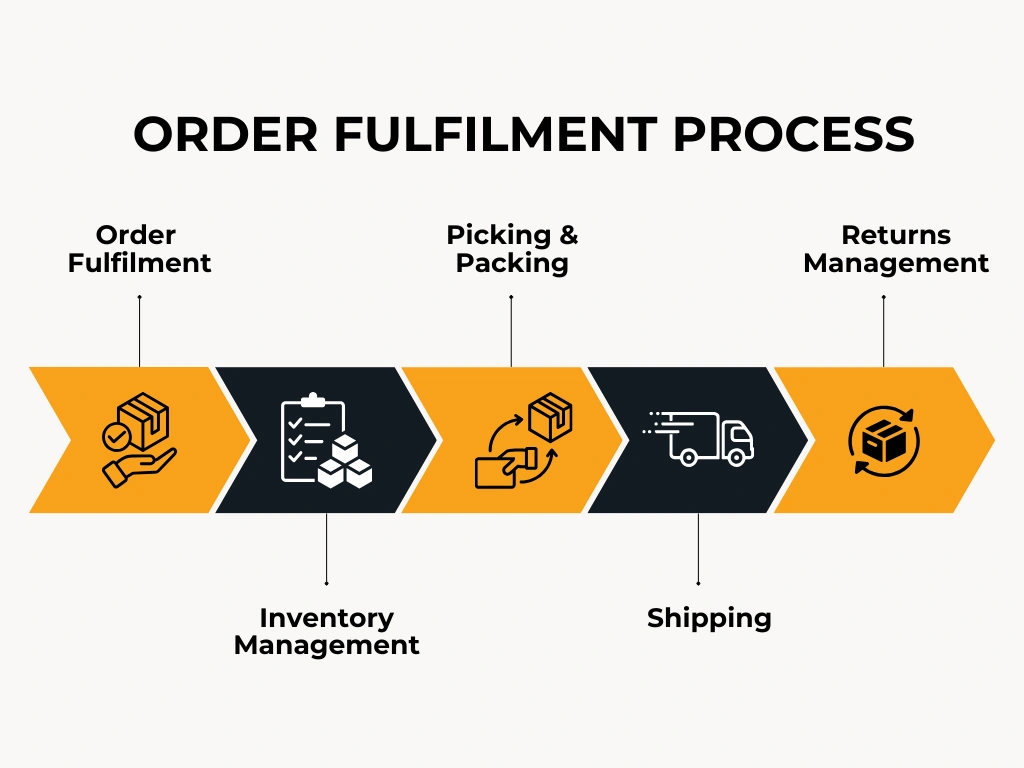
A 3PL logistics provider can take on as much or as little of your supply chain as you need. For many eCommerce businesses, that means handling everything from the moment stock arrives at the warehouse to the point it reaches your customer — and even dealing with returns afterwards. Here’s a breakdown of the key services most 3PLs provide:
1. Order Fulfilment
Order fulfilment covers the entire process from a customer placing an order to it arriving at their door. Once an order comes in, the 3PL’s systems automatically process it, generate a picking list, and trigger the packing and shipping steps. This approach keeps orders moving quickly, reduces the risk of mistakes, and ensures customers receive exactly what they ordered. For example, a 3PL might process hundreds of orders in a single morning — something that would be far harder to achieve in-house without a large team.
A 3PL will store your products in their warehouse and track them using warehouse management software (WMS). This gives you a real-time view of what’s in stock, what’s running low, and which products are moving fastest. Accurate stock data helps prevent overselling, stockouts, and excess storage costs. Many 3PLs can also handle batch control, expiry date tracking, or product kitting if needed — meaning you can stay organised without having to manually check every shelf.
3. Picking and Packing
Once an order is ready to go, warehouse staff (or automated systems in some facilities) pick & pack the items and prepare them for shipment. Accuracy and speed at this stage can make or break the customer experience, which is why many businesses dive deeper into how picking and packing works in eCommerce fulfilment to fully understand its impact on efficiency and customer satisfaction. The packing process can be tailored to your needs — from plain, protective packaging to fully branded unboxing experiences. This step ensures that goods arrive in perfect condition, ready to impress the customer.
4. Shipping
After packing, the 3PL books the shipment with the most suitable courier for the destination, delivery speed, and budget. Many 3PLs have partnerships with major carriers, giving you access to better shipping rates than you might get alone. They also take care of labelling, customs documentation (for international orders), and live tracking updates so you and your customers always know where the parcel is.
5. Returns Management
When customers return an item, the 3PL’s returns management process kicks in. They receive the item, check its condition, and follow your instructions — whether that’s restocking, repairing, or disposing of it. This ensures returns are handled quickly and hassle-free for customers, while freeing you from the time-consuming admin of processing them yourself.
Why is 3PL Important in Supply Chain?
After learning how 3PL operates, let’s examine why supply chain management relies so heavily on it.
Expertise & Specialisation:
Firstly, 3PL providers enable businesses to draw on their knowledge and skills in particular logistical domains by bringing specialised expertise to the table. Third-party logistics providers provide the necessary infrastructure to manage shipping, warehousing, and order fulfilment tasks effectively.
Flexibility and Scalability:
Moreover, businesses can adjust their operations as needed by outsourcing logistics to a 3PL provider. This allows companies to remain flexible and responsive to market changes, quickly adapting to new demands.
Cost Efficiency:
Businesses can cut costs by using economies of scale, shared resources, and optimised procedures when they have the help of 3PL providers. Third-party logistics companies possess the necessary network to optimise operations and minimise overhead expenses. By doing this, it will enhance a clients’ profitability.
Global Reach and Market Access:
Many 3PL suppliers have global reach, meaning businesses find it easier to expand new markets. Furthermore, third-party logistics providers help businesses effectively manage the hurdles of international trade. This is because they enable growth by handling cross-border shipping, customs clearance, and international distribution.
Improved Customer Experience:
By speeding up deliveries, getting orders correct, and overall running smooth logistics, businesses can make customers happier by working with a reliable 3PL provider. Over time, this can lead to more loyal customers and better profits for the company if done right in logistics.
3PL in Different Industries
Books & Media – Accuracy is key when it comes to ISBNs and barcodes. A Books and Media Fulfilment service ensures each order is packed correctly, often using letterbox-friendly packaging for smoother deliveries. For wholesale orders, 3PLs can handle bulk drops to retailers, taking the complexity out of distributing large quantities.
Beauty & Cosmetics – From batch and expiry control to the delicate handling of fragile bottles and jars, a Beauty Fulfilment partner knows how to keep products in perfect condition. Many also manage Subscription Box Fulfilment, ensuring each curated box is assembled accurately and on time for regular dispatch cycles.
Supplements & Vitamins – In this sector, lot tracking and temperature-aware storage aren’t optional — they’re compliance essentials. Supplement Fulfilment services also ensure the correct inserts and safety information are included in every order, meeting both legal requirements and customer expectations.
Electronics & Accessories – A strong Electronics Fulfilment process handles secure storage, captures serial numbers for warranty tracking, and manages the careful assembly of multi-item kits. This reduces the risk of damage during shipping while maintaining traceability.
Apparel & Fashion – Clothing orders often involve multiple size and colour variants, and Apparel & Fashion Fulfilment specialists excel at keeping this organised. Pre-packed sets for promotions and easy returns handling help maintain a smooth customer experience while minimising the impact of exchanges on stock flow.
When Should I Outsource Logistics?
Deciding when to outsource logistics depends on various factors. Here are some key indicators that it may be time to consider a 3PL:
1. Struggling with Order Volume
If order fulfilment is becoming too time-consuming or overwhelming, a 3PL can help manage the workload efficiently.
2. Limited Storage Space
When inventory outgrows available space, partnering with a 3PL that offers warehousing solutions can be a cost-effective alternative to leasing additional storage.
3. High Shipping Costs
If shipping costs are cutting into profits, a 3PL can provide better rates by leveraging bulk shipping discounts and optimised logistics routes.
4. Expanding to New Markets
If your business is expanding nationally or internationally, a 3PL can handle cross-border logistics, ensuring compliance with customs regulations and reducing transit times.
5. Lack of Logistics Expertise
Managing logistics requires industry knowledge, technology, and resources. If logistics is becoming a bottleneck, outsourcing to a specialist can free up time to focus on business growth.
6. Poor Customer Experience
Frequent delivery delays, incorrect orders, or stockouts can damage a brand’s reputation. A 3PL ensures smooth logistics, improving customer satisfaction and retention.
How to Choose the Right 3PL
Choosing a the best 3PL fulfilment services isn’t just about ticking a few boxes – the right choice can save you money, protect your brand reputation, and improve customer satisfaction. Here’s a practical checklist to guide you through the process:
1. Integrations You Actually Use
Make sure the 3PL connects directly with your current sales platforms — whether that’s Shopify, Amazon, eBay, WooCommerce, Veeqo, or Linnworks. Real-time order syncing and stock updates are essential to avoid overselling or delays.
2. SLAs You Can Hold Them To
Ask about Service Level Agreements (SLAs) covering order cut-off times, accuracy targets, and returns turnaround. If a 3PL commits to dispatching all orders placed before 3pm the same day, you need to know you can rely on that during peak seasons.
3. Transparent Pricing
Look for clear breakdowns of storage fees, pick-and-pack charges, packaging costs, and courier surcharges. Avoid vague quotes — you want to know exactly what’s included so there are no surprises on your monthly invoice.
4. Location & Carriers That Match Your Delivery Promise
If next-day delivery is part of your brand’s selling point, your 3PL should work with fast, reliable carriers like DPD. For small or letterbox-sized items, Royal Mail might be more cost-effective. Their location also matters — being close to major courier hubs can cut delivery times.
5. Operational Fit
Consider the finer details of your product range. Do you need strict batch or expiry date management? Do you sell kits or bundles? Is custom packing part of your brand experience? For B2B clients, can the provider handle pallet orders as smoothly as D2C shipments?
Pro Tip: Start with a trial run. Choose a single product line or regional customer base and work with the 3PL for 30–60 days. Track accuracy rates, delivery speed, and customer feedback before committing to a full rollout.
Why Choose PackPro Fulfilment
Every point on the checklist is built into how we work, with extra options to fit your exact needs. Our 3PL fulfilment services integrate with any marketplace or sales channel you use, from Shopify fulfilment, eBay, and WooCommerce to Amazon and specialist niche platforms. We also connect with leading courier integrations like Royal Mail, DPD, EVRi, and Parcelforce — or your preferred shipping partner.
Our transparent fulfilment pricing means you’ll always know what you’re paying for, and our flexible operations cover everything from single-item D2C orders to large B2B pallet shipments.
With a strong focus on accuracy, same-day dispatch, and proactive communication, we make sure your logistics run efficiently — so you can focus on growing your business, not managing your warehouse.
Final Thoughts
3PL is more than just outsourced logistics — it’s a way to save time, cut costs, and deliver a better experience for your customers. From managing inventory and fulfilment to shipping and returns, the right 3PL partner keeps your supply chain running smoothly while you focus on growing your business. Whether you’re handling books, beauty products, electronics, or apparel, a reliable provider can adapt to your needs and scale with your goals. If you’re ready to simplify operations and boost efficiency, finding the right 3PL could be the next step forward.